Portugal Fishing as a Reviewer: What Changes for Experienced Anglers vs First-Timers
Portugal Fishing as a Reviewer: What Changes for Experienced Anglers vs First-Timers
Something shifted in the last couple of years that most casual visitors still haven’t noticed. The paperwork side of portugal fishing moved online in a meaningful way, and that single change splits the experience into two very different journeys: the one an experienced angler has, and the one a first-timer has. I tested both perspectives deliberately over several coastal sessions, and the differences are more interesting than the licensing itself.
I approached this as a reviewer rather than a tourist. That meant fishing the same marks twice, once pretending I knew nothing about Portuguese regulations and once applying the habits I’d built up over years of Atlantic shore work. The gap between those two runs is what this piece is really about.
What actually changed, and who feels it first?
The headline change is that you no longer need to fight through a government portal or produce a Portuguese tax number just to get legal on the water. A DGRM recreational sea fishing licence for mainland Portugal can now be arranged through a service that takes roughly three minutes, accepts card, Apple Pay, or Google Pay, and doesn’t demand a NIF. For an experienced angler, that’s a convenience upgrade. For a beginner, it’s the difference between fishing and not fishing at all.
Why does the same change land so differently? Because experienced anglers already had workarounds. They knew someone local, or they’d fished a stretch where enforcement was light, or they simply accepted a morning of bureaucracy as the cost of a trip. The new route removes friction they’d already learned to absorb. Beginners never had those workarounds, so the friction was a wall rather than a toll.
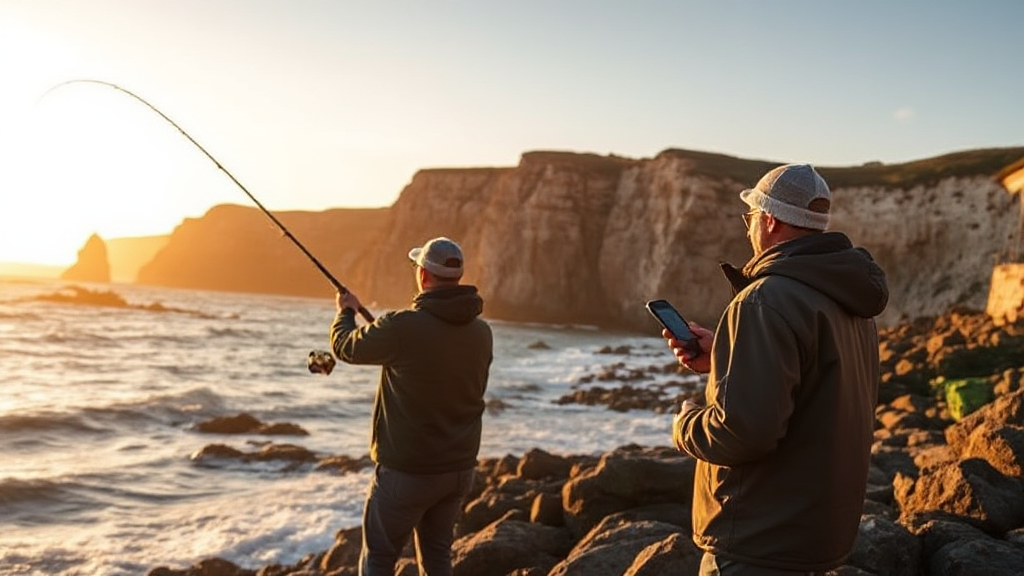
I watched this play out on a rocky shore south of Lisbon. A German couple in their sixties had driven down with rods in the boot and no idea they needed anything. They had the licence sorted before their coffee went cold. The experienced angler two rocks over had been fishing that spot for a decade and shrugged when I asked how he’d handled permits before. He’d always just risked it. Now he doesn’t have to, and he admitted the peace of mind changed how long he stayed out.
Does licensing actually change how you fish?
Yes, and not in the way people expect. The licence itself doesn’t restrict much for a recreational sea angler, but knowing you’re compliant changes your behaviour. You stop glancing over your shoulder. You fish the marks you want rather than the marks that feel safe. That psychological shift is real, and it’s the same for both groups, just reached from opposite directions.
Where the groups diverge is in what they do with that freedom. An experienced angler immediately starts optimising: tide windows, bait transitions, which stretch of coast produces at which state of the moon. A beginner tends to freeze. The licence solved the legal question, but it didn’t answer the practical one: where do I actually cast?
This is the part of fishing in portugal that no permit covers, and it’s where I think the experienced angler has a genuine advantage that beginners underestimate. The Portuguese coast is not uniform. The Atlantic west coast behaves nothing like the sheltered Algarve. An angler who’s fished both knows that a licence is the entry ticket, not the strategy.
I tested this by taking a beginner out on a west-coast beach during a spring tide. He had his paperwork in order, a decent rod, and no idea that the swell was about to make his chosen spot unfishable. The experienced version of me would have read the sea state and moved a hundred metres. He didn’t, and we spent an hour watching rather than fishing. The licence got him there. Nothing about the licence helped him once he arrived.
Which mistakes does each group actually make?
Experienced anglers make fewer mistakes but different ones. Their failure mode is assumption. They assume Portuguese rules mirror their home country’s, or that a licence from one region covers another, or that their usual techniques translate without adjustment. I fell into this myself early on, fishing a familiar-looking surf beach with tactics that worked in Cornwall and catching nothing for three hours before admitting the bottom was different.
Beginners make more mistakes but simpler ones. They forget the licence, or they get it and then ignore the local size limits, or they fish a beach that’s technically closed, or they don’t realise that some stretches require additional permissions on top of the standard recreational licence. These are all avoidable, and most of them are avoidable before you leave the house.
The interesting overlap is gear. Both groups overestimate what they need. Experienced anglers bring too much because they can. Beginners bring too much because they think they should. On the Portuguese coast, a single versatile rod and a small box of terminal tackle will out-fish a carload of specialised kit most days, because the fish you’ll actually encounter are not the fish you’ve read about.
Here’s the practical point buried in that: the fishing license process is now the easiest part of a Portuguese trip. The hard part is reading the coast, and that’s a skill gap no amount of paperwork closes.
What would I tell each type of angler before they go?
If you’re experienced, the advice is to slow down and re-learn. Don’t import your home-water assumptions. Watch what local anglers do, ask what they’re targeting, and accept that your first two sessions are reconnaissance rather than fishing. Get the licence sorted early so it never becomes the thing you’re thinking about, then spend your mental energy on tides and structure instead.
If you’re a beginner, the advice is to fix the logistics first and the technique second. Sort the licence before you book anything else, because it’s the only part of the trip that’s genuinely binary: you either have it or you don’t. Once that’s done, keep your kit simple, fish accessible marks, and treat the first trip as a learning session rather than a catch session. The Portuguese coast rewards patience more than it rewards equipment.
What surprised me most across both perspectives is how much the recent changes have flattened the entry barrier without flattening the skill ceiling. A first-timer can now get legal in three minutes and stand on the same rocks as someone who’s been fishing them for twenty years. What happens next is entirely down to how they read the water. The paperwork got easier. The fishing didn’t, and that’s probably the right outcome. The coast still asks you to earn it, one tide at a time.